
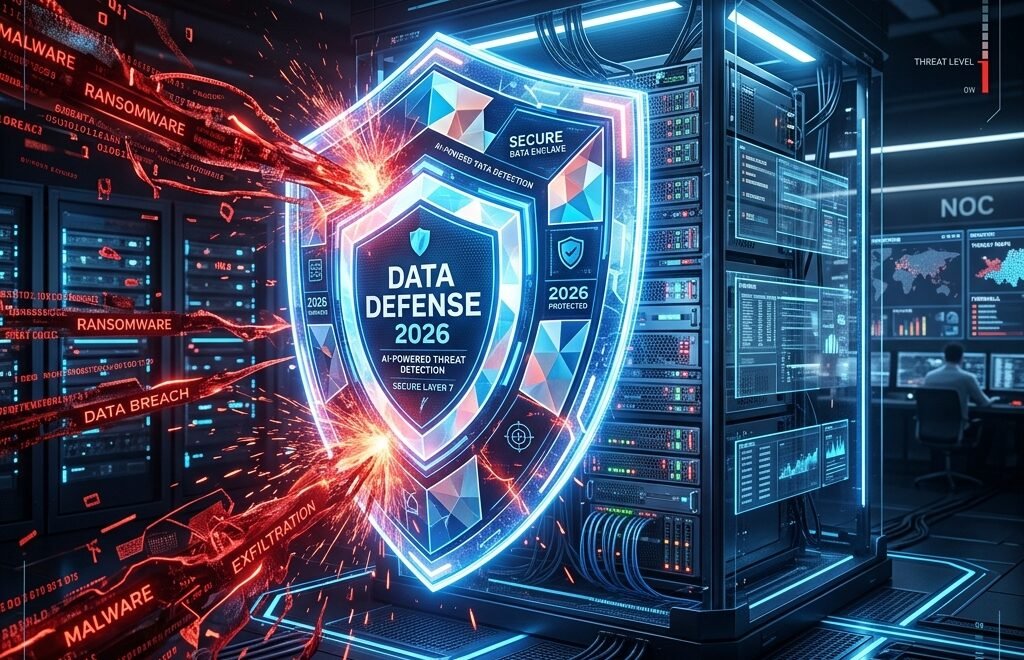
If you are an IT manager or business owner, you already know that the cybersecurity landscape in 2026 is vastly different from even a year ago. We are no longer just fighting off teenage hackers guessing passwords. We are fighting highly sophisticated, automated, and AI-driven attack vectors that can dismantle a company’s infrastructure in minutes.
As we help businesses secure their enterprise environments here at Satsuma Droid Pvt Ltd, we see the exact same vulnerabilities being exploited time and time again. To keep your company’s data—and reputation—safe, you must proactively defend against these modern attacks.
Here are the Top 10 Emerging Cybersecurity Threats every IT manager must prepare for in 2026.
1. Autonomous “Agentic” Malware
Malware used to follow a strict set of pre-programmed rules. Today, hackers deploy autonomous AI agents that act like digital super-soldiers. Once inside your network, “agentic” malware actively learns your network architecture, hunts for the most valuable databases, and changes its own code to evade your antivirus software in real-time.
2. Ransomware 3.0: Data Poisoning
Traditional ransomware encrypts your data and demands a payout. Ransomware 3.0 does something worse: it subtly alters your data. Instead of locking your financial spreadsheets, it changes random numbers in your accounting software, making your entire financial record untrustworthy until you pay the ransom for the “clean” copy.
3. Deepfake Phishing (Vishing)
Your employees are trained not to click on shady email links. But what if they receive a voice memo on Slack or a live phone call that sounds exactly like your CEO, telling them to authorize an urgent wire transfer? Deepfake audio and video phishing are the number one cause of social engineering breaches in 2026.
4. Supply Chain API Attacks
Hackers know your internal security is tight, so they don’t attack you directly. Instead, they attack the third-party software vendors and APIs your company relies on. If an inventory management API you use gets compromised, the hackers can use that trusted connection to backdoor their way into your servers.
5. 5G Network Slicing Vulnerabilities
As IoT devices and edge computing become standard, many businesses rely on 5G networks. However, “network slicing” (creating virtual networks on a physical 5G infrastructure) has introduced complex new routing vulnerabilities that allow hackers to intercept edge data before it ever reaches the cloud.
6. Quantum-Ready Decryption Harvesting
Hackers are currently stealing massive amounts of encrypted data that they cannot read. Why? Because they are waiting for quantum computers to become mainstream in the next few years. Once quantum decryption is available, they will unlock all the “harvested” data. Businesses must migrate to Post-Quantum Cryptography (PQC) immediately to protect long-term intellectual property.
7. Cloud Misconfiguration Exploits
Despite all the advanced threats, simple human error remains a massive liability. As companies build more complex multi-cloud environments (using AWS, Azure, and Google Cloud simultaneously), simple misconfigurations in access buckets are leaving highly sensitive customer data exposed to the public internet.
8. Smart Contract Vulnerabilities
If your business uses blockchain technology for supply chain provenance or financial ledgers, you are at risk of smart contract exploits. Flaws in the code of these automated contracts can be instantly drained by hackers, and because blockchain is immutable, the stolen assets cannot be reversed.
9. Insider Threats Powered by AI
Disgruntled employees are now using AI tools to help them steal company data without triggering Data Loss Prevention (DLP) alarms. They can prompt AI to write custom scripts that siphon data out of the network in tiny, undetectable increments over several months.
10. Zero-Day Vulnerability Brokering
The dark web market for “Zero-Days” (software flaws that the software creator doesn’t know about yet) has exploded. State-sponsored hackers and massive cyber-cartels are buying these exploits to launch massive, coordinated attacks against enterprise software worldwide before patches can be developed.
How to Protect Your IT Infrastructure
You cannot fight 2026 threats with 2020 security measures. Your business needs a proactive, Zero-Trust architecture, automated AI defenses, and constant software maintenance to ensure every vulnerability is patched the moment it is discovered.
At Satsuma Droid Pvt Ltd, we specialize in securing enterprise IT environments and building custom, iron-clad software solutions. Contact us today for a comprehensive security audit.
Frequently Asked Questions (FAQ)
What is Zero-Trust Architecture?
Zero-Trust is a security framework that assumes threats exist both outside and inside your network. It requires strict, continuous authentication for every single person and device trying to access resources, regardless of whether they are sitting in your office or working remotely.
How can my business prevent Deepfake phishing?
The best defense against deepfakes is a combination of employee training and strict verification protocols. Require “out-of-band” authentication—for example, if an employee gets a voice memo requesting a wire transfer, they must verify it by sending a text message or initiating a live video call before proceeding.
Why do I need a software house to secure my systems?
Off-the-shelf antivirus software is no longer enough. A specialized software house can conduct deep penetration testing, configure custom AI firewalls, and ensure your proprietary software applications are coded securely from the ground up to withstand modern automated attacks.