
If you ask most business leaders what their biggest IT expense is, they will likely point to new software licenses or cloud hosting fees. But the reality is often much darker. The silent killer of enterprise IT budgets in 2026 isn’t new technology—it is the hidden, mounting cost of maintaining legacy software.
Many businesses rely on custom software that was built five, ten, or even fifteen years ago. It “works,” so executives are hesitant to touch it. But ignoring aging software is exactly like ignoring a leak in your roof. By the time it actually breaks, the damage will cost ten times more to fix than if you had simply maintained it.
At Satsuma Droid Pvt Ltd, we frequently step in to rescue companies drowning in technical debt. Here is an in-depth look at the hidden costs of legacy code and why proactive software maintenance is the most critical investment you can make this year.
What is Technical Debt?
Technical debt is the implied cost of additional rework caused by choosing an “easy” (limited) solution now instead of using a better approach that would take longer. When your previous developers took shortcuts to get an app launched, or when you defer upgrading a database because it’s “too expensive right now,” you accrue technical debt.
In 2026, technical debt doesn’t just mean your code is messy. It means your app cannot integrate with modern AI tools, it cannot be hosted on serverless cloud architectures, and it is fundamentally incompatible with modern mobile devices.
The 4 Hidden Costs of Ignoring Software Maintenance
1. The Security Nightmare (Zero-Day Exploits)
Hackers love legacy software. Every time a library, framework, or server OS that your software relies on goes out of date, its vulnerabilities become public knowledge. Without active software maintenance to patch these holes, your aging app becomes an open door for automated ransomware agents. A single data breach will cost exponentially more than a decade of routine maintenance.
2. Vendor Lock-in and Cloud Incompatibility
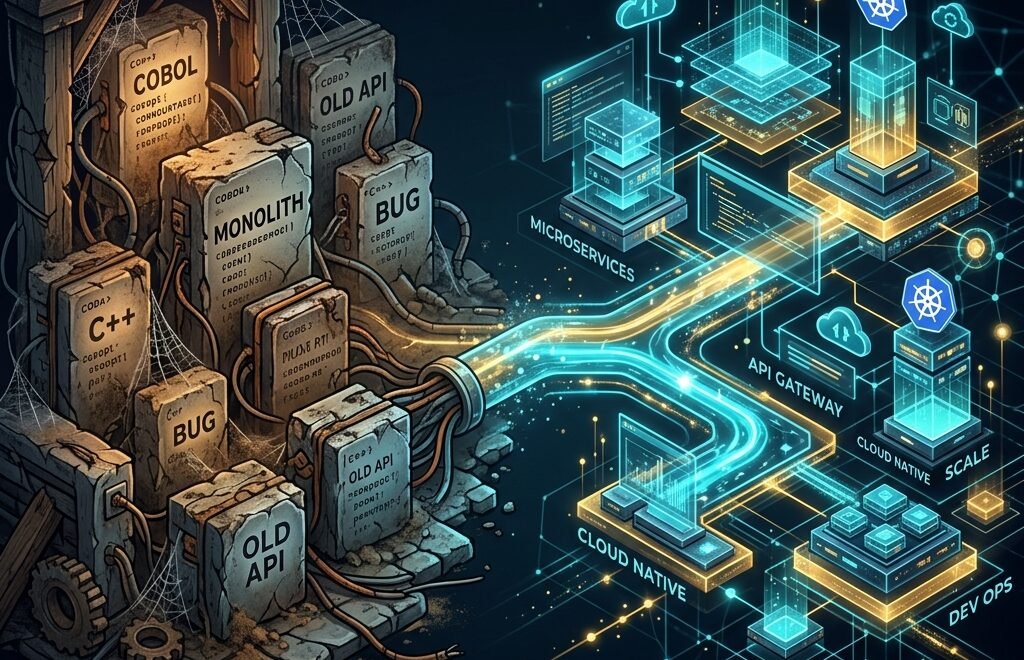
Old software is usually monolithic, meaning it runs as one massive block of code on a single, expensive server. Modern applications use microservices and serverless architectures to dramatically lower hosting bills. If your software isn’t actively maintained and modernized, you are stuck paying exorbitant, legacy hosting fees because your code simply cannot run on modern, cost-efficient cloud infrastructure.
3. The “Brain Drain” Problem
Who built your custom software? If it was an internal developer who left three years ago, or a cheap offshore agency that no longer answers your emails, you have a massive “brain drain” problem. As older programming languages fade into obscurity, finding engineers who know how to fix your legacy code becomes incredibly expensive. You will end up paying premium consulting rates just to keep the lights on.
4. The Opportunity Cost of Slow Deployment
When code is old and fragile, adding a simple new feature can take weeks. Developers have to tiptoe around the legacy codebase, terrified of breaking something else. This means your competitors, who have well-maintained, agile software, can launch new features and capture your market share while your team is still trying to debug a 10-year-old database query.
How to Rescue Your Legacy Software
You don’t always have to throw away your old software and start from scratch. A specialized software house can perform a “Strangler Fig” modernization. This involves slowly wrapping your old application in modern code, peeling away the outdated legacy functions one by one, and replacing them with highly secure, scalable microservices—all without any downtime to your business.
At Satsuma Droid Pvt Ltd, we provide expert, ongoing software maintenance and modernization services. We take over messy, undocumented legacy codebases, secure them against modern threats, and optimize them for the future.
Contact our engineering team today to schedule a technical audit of your existing software.
Frequently Asked Questions (FAQ)
What is the difference between software maintenance and modernization?
Software maintenance is the routine process of updating dependencies, patching security flaws, and fixing bugs to keep an app running as intended. Modernization is a larger effort to rewrite or restructure the core architecture of the app so it can take advantage of new technologies like AI or cloud-native hosting.
Is it cheaper to rebuild an app from scratch or maintain the old one?
It depends entirely on the state of the “technical debt.” If the core logic is still sound, refactoring and maintaining the old app is usually cheaper. However, if the app is built on a totally dead programming language with critical security flaws, a complete rebuild is often the most cost-effective long-term solution.
Can a new software house take over code built by someone else?
Absolutely. Professional agencies like Satsuma Droid specialize in “code rescue.” We conduct deep code audits, reverse-engineer undocumented features, and take full ownership of maintaining and upgrading applications originally built by other developers.