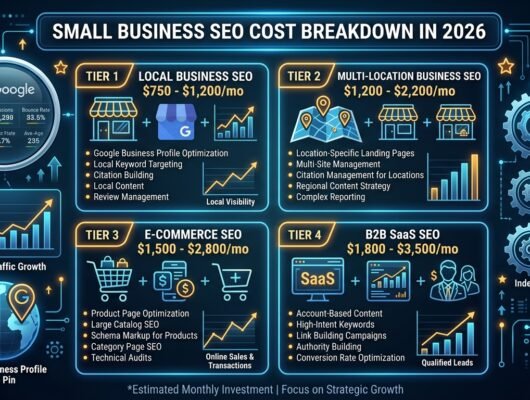


The cost of SEO for a small business in 2026 typically ranges from $1,000 to $5,000 per month, depending on the competitiveness of the industry and the scope of the campaign. Understanding how this budget is allocated—across technical audits, content creation, and off-page link building—is critical to ensuring a positive return on investment. This guide breaks down the realistic costs of search engine optimization so you can budget effectively without overspending on vanity metrics.
Why SEO Pricing Varies So Much
SEO pricing is not standardized; it fluctuates based on your baseline website health, your geographic target market, and the operational overhead of the agency you hire.
A local plumbing company looking to rank in a single city will require a vastly different strategy—and budget—than a B2B SaaS startup competing globally. Furthermore, if your website suffers from deep architectural issues or a poor backlink profile, the initial months will require heavy technical remediation before any new growth strategies can be applied. The variance in pricing also stems from the quality of the deliverables. High-end, data-driven content and placements on authoritative publications cost significantly more than generic blog posts and low-tier directory submissions.
Average SEO Costs in 2026: A Breakdown
Most established SEO campaigns are billed on a monthly retainer model, though hourly consulting and project-based pricing are also common for specific technical tasks.
- Monthly Retainers ($1,000 – $5,000/month): This is the most effective model for sustained growth. A retainer typically covers ongoing keyword research, technical monitoring, content production, and link acquisition.
- Project-Based Pricing ($1,500 – $10,000+): Often used for discrete tasks such as a comprehensive site audit, a one-time technical cleanup, or migrating a legacy site to a new CMS without losing rankings.
- Hourly Consulting ($100 – $300/hour): Best for in-house marketing teams that need high-level strategic guidance or troubleshooting for specific algorithmic penalties, but who will execute the actual work themselves.
In reviewing our digital marketing portfolios at Satsuma Droid over the past year, we observed a distinct threshold. Small businesses allocating a consistent $1,500 to $3,000 monthly toward structured SEO typically see a measurable return on investment within 6 to 9 months. Conversely, those spending under $500 monthly often plateau, as that budget is rarely sufficient to produce the deep, authoritative content and high-quality backlinks required by Google’s recent core updates.
Where Does Your SEO Budget Actually Go?
A healthy SEO budget is distributed across three core pillars: Technical SEO, Content Strategy, and Off-Page Authority Building.
| SEO Pillar | What It Includes | Typical Budget Allocation |
|---|---|---|
| Technical SEO | Site speed optimization, mobile responsiveness, structured data (schema), crawl error resolution, and indexation management. | 15% – 25% (Heavier in months 1-2) |
| Content Creation | Keyword research, writing authoritative long-form guides, updating existing thin content, and optimizing landing pages for search intent. | 40% – 50% |
| Off-Page & PR | Acquiring high-quality backlinks, digital PR outreach, unlinked brand mention reclamation, and local citation building. | 30% – 40% |
It is important to note that content creation in 2026 requires significantly more depth than in previous years. To satisfy Google’s focus on Experience, Expertise, Authoritativeness, and Trustworthiness (E-E-A-T), content must incorporate original data, expert insights, and clear authorship. This elevates the cost of production but drastically improves ranking durability against algorithm shifts.
Red Flags: When SEO is “Too Cheap”
Extremely low-cost SEO (e.g., $200 – $400/month) often relies on outdated, automated tactics that violate search engine guidelines and risk penalizing your site.
If an agency guarantees a #1 ranking or offers packages at dramatically below-market rates, they are likely cutting corners. This usually manifests as spun, AI-generated content published at scale with no editorial oversight, or the procurement of toxic backlinks from private blog networks (PBNs). While these tactics might yield a temporary bump in visibility, they almost always result in a manual action or algorithmic penalty that can take months—and thousands of dollars—to reverse.
Frequently Asked Questions
How long does it take for SEO to pay for itself?
SEO is a compounding, long-term strategy. For a new website, it typically takes 6 to 9 months of consistent investment to see a noticeable increase in qualified organic traffic and lead generation. Established sites with existing authority may see results in 3 to 4 months.
Should I hire an agency, a freelancer, or do it in-house?
Freelancers are cost-effective for specific tasks (like writing), but lack the resources for a full-scale campaign. Hiring an in-house SEO specialist provides total focus but carries high overhead (salary + tools). An agency offers a fractional team of specialists (writers, technical experts, outreach managers) often for less than the cost of one full-time employee.
Is local SEO cheaper than national SEO?
Generally, yes. Local SEO focuses on optimizing your Google Business Profile and ranking within a specific geographic radius, which involves less competition than trying to rank nationally against industry giants. A typical local SEO campaign ranges from $500 to $1,500 per month.
Can I just pay for SEO once?
You can pay for a one-time technical audit or site setup, but search rankings are dynamic. Your competitors are constantly publishing new content and building new links. To maintain and grow your rankings, ongoing monthly investment is required.
Ready to invest in sustainable organic growth?
Stop wasting budget on vanity metrics. Satsuma Droid provides transparent, data-driven digital marketing strategies focused entirely on revenue and lead generation.
Get a Custom SEO Estimate